
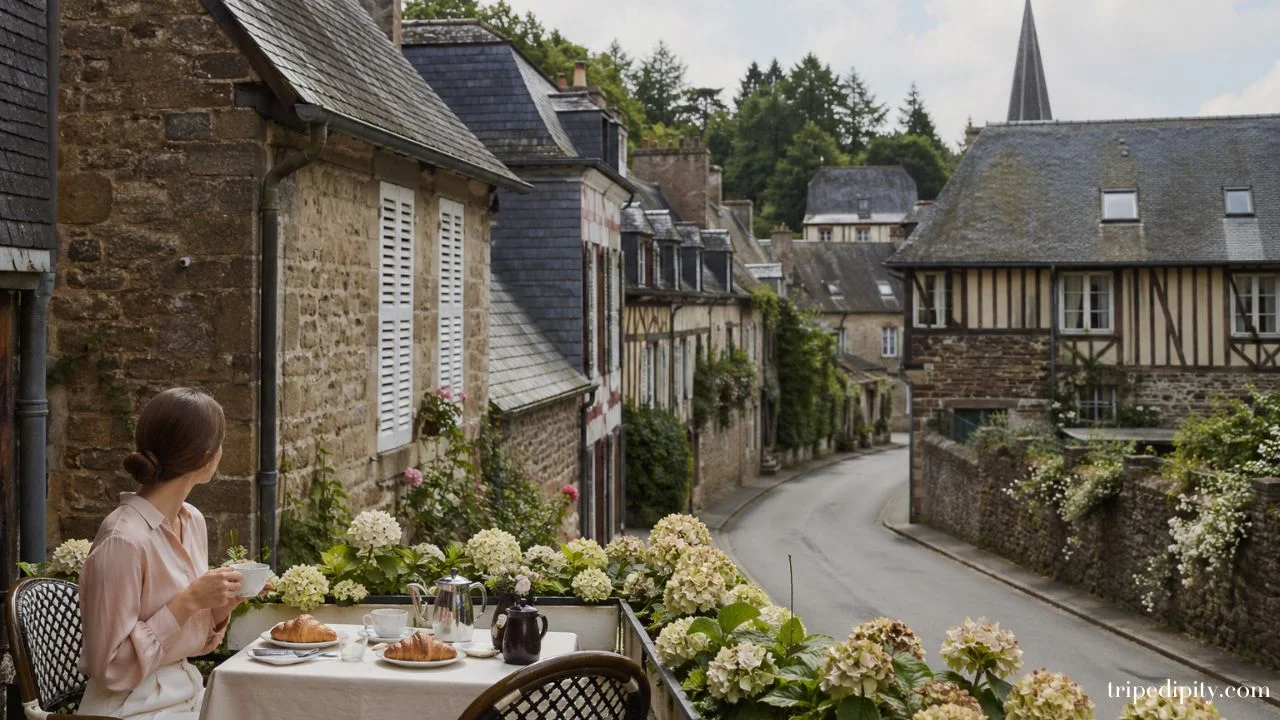
Introduction
A Normandy travel guide should make the region feel easier to plan without flattening what makes it beautiful. Normandy is not a place that works best when reduced to a rushed list of landmarks. Its charm lives in the way the trip feels as you move through it: the cathedral streets of Rouen, the quieter steadiness of Caen, the harbor light in Honfleur, the intimacy of Bayeux, and the moments when the coast opens out into something wider and softer.
For many travelers, especially those drawn to graceful, experience-led trips, this Normandy travel guide begins with the idea that Normandy becomes one of the most satisfying regions in France because it holds romance and practicality in the same hand. You can shape a route that feels thoughtful, beautiful, and very real without needing an exhausting plan.

This Normandy travel guide brings together the essentials: where to stay, what to see, how many days to allow, the best time to go, and how to shape a first trip that feels calm instead of crowded.
Quick Answer On Normandy Travel
This Normandy travel guide works best when the region is planned as a 3 to 5 day slow-travel trip built around one or two thoughtful bases, a mix of city and coast, and enough space for beauty, meals, and wandering.
Normandy Travel At A Glance
| Question | Best Fit | Why | Best For | Related Post To Add Later |
|---|---|---|---|---|
| How long? | 3 to 5 days | Enough time for city, coast, and softness | First-time visitors | How Many Days in Normandy Do You Need? |
| Best arrival base | Rouen | Atmospheric and easy from Paris | Short trips and first impressions | Rouen Day Trip from Paris | Medieval Charm in Normandy |
| Best all-purpose base | Caen | Calm, practical, and easy to inhabit | Slow travel and fewer hotel changes | Where To Stay In Normandy: Best Areas For Slow Travel |
| Most romantic base | Honfleur | Harbor charm and softer mood | Couples and weekend breaks | Normandy For Couples: The Most Romantic Places and Stays |
| Best season | Spring or early autumn | Soft light and calmer pace | Elegant first trips | Normandy In Spring Vs Autumn: When Should You Go? |
Why Normandy Feels So Special
Normandy rewards travelers who want more than a quick checklist of famous stops. The region has beauty, but it is a softened kind of beauty, shaped by harbors, stone towns, church bells, markets, gardens, and stretches of coast where the light keeps changing. It feels romantic without being theatrical, and practical without losing atmosphere.

That balance is what makes Normandy so good for Tripendipity-style travel. You can move through it slowly and still feel that each day holds something distinct. One morning might begin in a medieval street, another by the sea, and another in a quieter inland town that feels beautifully lived-in rather than polished for visitors.
Pro Tip: Treat Normandy as a mood-led trip rather than a high-speed sightseeing mission. That is when it becomes memorable.
How Many Days You Need
For a first visit, 3 to 5 days is the sweet spot. Three days is enough for a short, elegant version built around one or two bases. Four days gives you a gentler pace and room for both city and coast. Five days is where Normandy begins to feel fully breathable, with enough time for a little wandering, longer lunches, and a final day that does not feel squeezed.
If your travel style is naturally slow, do not try to force too many stops into a short trip. Normandy improves when you edit the itinerary and let the region unfold gradually. Seeing slightly less almost always creates a more beautiful trip here.
Pro Tip: If you only have 3 days, choose one main base and one secondary mood stop rather than trying to cover the entire region.
Where To Stay In Normandy
Where you stay shapes the entire rhythm of the trip. Rouen is one of the best choices if you want a dramatic, atmospheric arrival, especially from Paris. Caen works beautifully if you want a calmer multi-day base with practical reach and a quieter daily rhythm. Honfleur is the loveliest choice for harbor romance, while Bayeux is ideal if you want a smaller town with depth and intimacy.

There is no single best answer for every traveler. The right base depends on whether you want city charm, coastal softness, historical weight, or a more restorative pace. In Normandy, the emotional feel of the base matters just as much as geography.
Pro Tip: Choose the base that matches how you want mornings and evenings to feel, not only the map.
The Most Beautiful Places To Include
A first Normandy trip usually works best with a mix of old-town atmosphere, one or two strong bases, and at least one coastal chapter. Rouen brings medieval beauty and a graceful arrival. Caen brings steadier city energy. Bayeux adds intimacy and historical depth. Honfleur adds romance. Etretat adds dramatic natural contrast. A smaller village stop can soften the whole route even further.
The point is not to collect every famous place. It is to choose a set of stops that create emotional variety. A strong Normandy travel guide should help readers build that balance, because Normandy feels richest when the trip moves between stone, sea, quiet town life, and one or two slower pauses that give the journey texture.
Pro Tip: Think in moods: city, harbor, coast, and village. That combination usually feels fuller than choosing only one type of stop.
The Best Time To Visit Normandy
Late spring and early autumn are usually the most graceful times to visit Normandy. Spring brings softness, blossom, gardens, and a lightness that suits the region beautifully. Early autumn adds warmth, muted gold tones, and a calmer feel after peak summer movement. Both seasons tend to suit slow travel better than the busiest summer stretch.

Winter can still be lovely if you are drawn to quieter streets, reflective coastal moods, and more private-feeling towns. But it works best for travelers who understand that Normandy in colder months is about atmosphere and depth, not abundance and energy.
Pro Tip: Choose the season that matches your mood: spring for softness, autumn for richness, and winter for quiet depth.
Normandy From Paris Or As A Standalone Trip
Normandy can work either as an extension from Paris or as a trip in its own right. If you are based in Paris and only have a short window, Rouen is an easy and rewarding gateway. If you have a little more time, Normandy becomes much more satisfying when it is allowed to stand on its own instead of being squeezed into a crowded France itinerary.

The region has enough atmosphere and variety to carry a full trip, especially if you care about beauty, pace, and small lived moments. It is one of those places that often surprises travelers by feeling far more emotionally complete than they expected.
Pro Tip: If you can, give Normandy its own chapter instead of treating it as a side note after Paris.
How To Shape A First Route
A simple first route might begin in Rouen, move toward Caen or Bayeux, then fold in Honfleur or another coastal stop before ending softly. That structure gives you architectural atmosphere, a practical middle base, and a more romantic coastal close. It also keeps the trip balanced instead of scattering energy across too many transitions.

If you only have a weekend, narrow the route. Choose one strong base and add only one supporting place that changes the mood. Normandy always feels better when the route has intention rather than ambition for its own sake.
Pro Tip: If the route starts to look crowded on paper, it will feel crowded in real life. Edit early.
More On Normandy Travel
Normandy, France: One of Europe’s Most Beautiful Slow Travel Destinations
Where To Stay In Normandy: Best Areas For Slow Travel
Caen, France: A City of Quiet Strength and Timeless Beauty
15 Charming Places to Visit in Normandy, France
Rouen Day Trip from Paris | Medieval Charm in Normandy
10 Common Mistakes To Avoid When Planning Normandy Travel
- Trying to see too much in too few days
- Choosing a base only by fame instead of trip style
- Changing hotels too often on a short trip
- Treating Normandy as just a Paris add-on when you have enough time for more
- Ignoring how much mood and pacing affect the trip
- Skipping quieter towns because they seem less dramatic on paper
- Leaving no space for long meals, markets, and evening walks
- Choosing only inland or only coastal stops instead of balancing both
- Assuming winter is a bad idea without considering your travel style
- Ending the trip with a rushed final day
Conclusion
The best Normandy travel guide is not the one that tries to make the region bigger than it is. It is the one that helps you experience Normandy well. If you choose a thoughtful base, give yourself 3 to 5 days when possible, mix city beauty with coastal softness, and leave room for unhurried moments, Normandy becomes the kind of trip that feels elegant in memory as well as in photographs. In that sense, a good Normandy travel guide should always lead readers toward calm, beauty, and a trip shape they can actually enjoy.
10 FAQs About Normandy Travel
1. Is Normandy worth visiting for a first trip to France? Yes. Normandy is one of the most beautiful and emotionally rewarding regions for travelers who love atmosphere, slower pacing, and graceful day-to-day travel.
2. How many days do you need in Normandy? Three to five days is ideal for a first trip, depending on how slowly you want to travel.
3. What is the best base in Normandy? Rouen, Caen, Honfleur, and Bayeux are all strong choices, depending on whether you want atmosphere, practicality, romance, or intimacy.
4. Is Rouen or Caen better? Rouen is more dramatic and atmospheric, while Caen is calmer and often better as a multi-day base.
5. What are the most beautiful places in Normandy? Rouen, Honfleur, Bayeux, Etretat, and smaller village stops all bring different kinds of beauty to the trip.
6. When is the best time to visit Normandy? Late spring and early autumn are especially lovely for soft light, balanced pace, and a calmer overall feel.
7. Can you visit Normandy from Paris? Yes. Rouen is one of the easiest gateways, and Normandy can work very well from Paris if your time is limited.
8. Is Normandy good for couples? Very much so. The region suits romance beautifully, especially in harbor towns, old cities, and slower hotel-led stays.
9. Do you need a car in Normandy? Not always, but a car gives you more flexibility for smaller towns, village stops, and coast-led routing.
10. What makes Normandy good for slow travel? Its charm comes from atmosphere, variation, and smaller lived moments rather than rushing between major attractions.


