
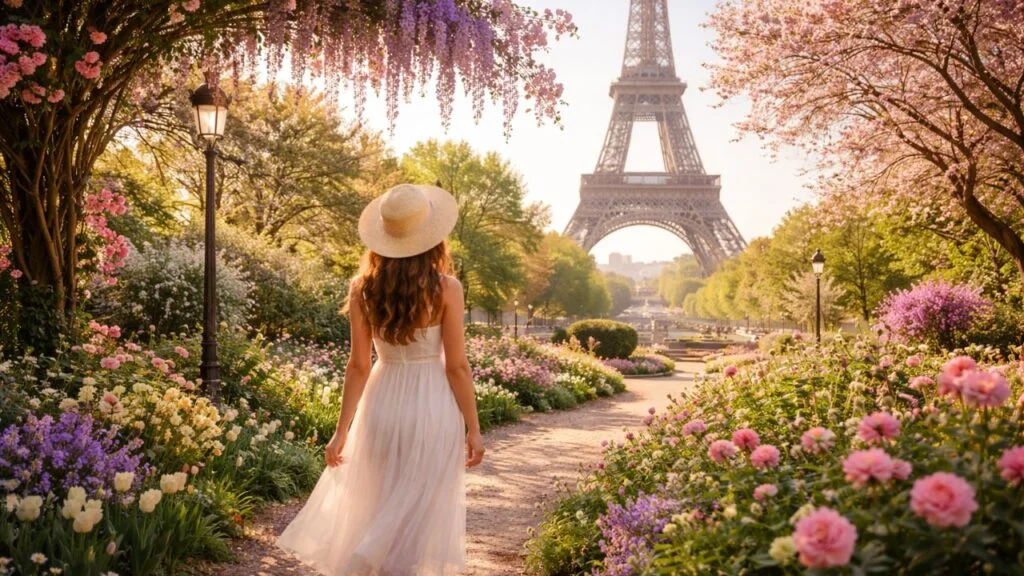
Introduction
Spring in Paris doesn’t arrive all at once—it unfolds gently.
A soft warmth replaces the winter chill, café chairs return to the sidewalks, and the city begins to open itself again. Trees bloom quietly along streets you might have walked past in winter without noticing.
There is a feeling of renewal here—but not in a dramatic way. It’s subtle, almost quiet. The kind you only notice when you slow down enough to feel it.

Paris in Spring: A Slower Way to Experience the City in Bloom
Spring in Paris is not defined only by blossoms or warmer weather—it’s more about how the city shifts in rhythm. Mornings feel quieter, evenings stretch longer, and the overall pace becomes more open and unhurried.
Choosing to visit Paris in spring allows for a different kind of experience. Instead of moving quickly between landmarks, the focus shifts toward walking without urgency, sitting longer in cafés, and paying attention to small details.
From early light along the Seine River to the stillness of Luxembourg Gardens, this season rewards a slower approach.
1. Why Spring Changes the Feeling of Paris
Paris in spring feels lighter—not just in temperature, but in pace.
The city doesn’t transform dramatically. Instead, it softens. Mornings stretch slightly longer, afternoons feel less rushed, and more people spend time outdoors without urgency.
You begin to notice the difference in how the city moves—less structured, more open.
Pro Tip: Visit between late March and early May for the best balance of bloom and calm.
2. Things to Do in Paris in Spring: Walking the Seine and Visiting the Eiffel Tower
Walking along the Seine early in the morning offers one of the calmest experiences in the city. The streets are quieter, and the light is softer before the day fully begins.
Starting near Île Saint-Louis and walking west allows you to move at a relaxed pace. Bookstalls begin to open, and the city gradually becomes more active.
By late afternoon, moving toward the Eiffel Tower changes the atmosphere. Sitting near Champ de Mars instead of rushing through makes the experience feel more balanced.
Visiting before 9 AM or after 6 PM helps avoid peak crowds.
3. Cherry Blossoms and Fleeting Beauty in Paris
Cherry blossoms in Paris are brief and easy to miss if you’re not paying attention.
They appear quietly—along streets, in gardens, in small corners—and soften the surroundings rather than dominate them.
For a few days, familiar places feel slightly different. Then the petals fall, and the moment passes.
Note: Early mornings are the best time to see blossoms without crowds.
4. Where to Go in Paris in Spring: Le Marais and Saint-Germain-des-Prés
Late mornings in Le Marais offer a mix of quiet streets and gradual activity. Smaller side streets often feel more comfortable to explore than main roads.
Walking without a fixed plan works well here. It allows you to notice details you might otherwise miss.
In the afternoon, moving toward Saint-Germain-des-Prés naturally slows the pace. Sitting at a café becomes part of the experience rather than a break from it.
5. Café Terraces and the Return of Stillness
Spring brings café terraces back into daily life.
Chairs face outward, sunlight reaches the tables, and time feels less structured. Sitting at a café becomes less about what you order and more about how long you stay.
Watching the street, listening to small moments around you, and not rushing the experience becomes part of the rhythm.
Pro Tip: Sit facing outward—the street is the view.
6. Spring Walks in Paris: Moving Without a Fixed Plan
Spring makes it easier to walk without a strict destination.
Starting at Canal Saint-Martin in the morning offers a slower beginning. The area remains quiet, and the pace feels unhurried.
As you walk, small details—light, streets, trees—naturally shift your direction.
Note: Late afternoon offers the softest light for longer walks.
7. Gardens That Feel Like a Pause in Time
Gardens in Paris during spring feel less like attractions and more like places to stop.
People sit without urgency, read, or simply rest. The environment remains calm, even when the city around it is active.
Time feels slower here—not heavy, just less structured.
Pro Tip: Bring something simple, or nothing at all.
8. Evenings That Linger a Little Longer
Spring evenings in Paris don’t end quickly.
The light fades gradually, especially along the Seine, and the city transitions slowly from day to night.
These moments don’t need planning. A short walk, a quiet pause, or simply staying outside a little longer is often enough.
Note: Sunset walks feel especially calm during this time of year.
9. What to Wear in Paris in Spring
Spring weather in Paris changes throughout the day, so flexibility matters.
Layered clothing works best—a light coat, comfortable shoes, and a scarf are usually enough.
Comfort is important, especially if you plan to walk often and stay out longer.
Pro Tip: Choose simple pieces that work from morning to evening.
10. Best Time to Visit Paris in Spring
April offers a quieter experience, with cooler mornings and fewer crowds.
May feels more active, with longer evenings and more consistent weather.
Both months work well—the choice depends on whether you prefer a quieter or slightly more social atmosphere.
Planning your day around early mornings and late afternoons helps avoid crowds and improves the overall experience.
Travel Essentials for Paris in Spring
Comfortable walking shoes are essential, especially in areas like Montmartre.
A light jacket, scarf, and crossbody bag help you adjust throughout the day without carrying too much.
Keeping things simple makes it easier to move through the city without feeling restricted.
More on Paris & Europe Travel:
10 Most Romantic Gardens in Paris
15 Most Romantic Streets in Paris You’ll Want to Wander Slowly
15 Hidden Gems in Paris You’ll Fall in Love With (Unique Things to Do in Paris)
10 Most Romantic Things to Do in Paris at Night
25 Free Things to Do in Paris: The Chic Insider’s Guide
Christmas in Paris: Best Things to Do This Holiday Season
Paris in Winter: Chic Outfit Ideas & The Only Packing List You Need
10 Fairytale Towns in Europe That Feel Like Storybooks
10 Common Mistakes to Avoid When Visiting Paris in Spring
1. Packing only light clothing
Spring weather can still feel cool, especially in the evenings.
2. Planning every hour
You’ll miss spontaneous, seasonal moments.
3. Ignoring gardens
They are central to the spring atmosphere.
4. Visiting only major landmarks
The beauty of spring is often found elsewhere.
5. Rushing through cafés
They are meant for lingering, not quick stops.
6. Not checking bloom timing
Cherry blossoms don’t last long.
7. Staying indoors too much
Spring is best experienced outside.
8. Wearing uncomfortable shoes
Walking is essential to experiencing Paris.
9. Only exploring during midday
Morning and evening offer softer, more atmospheric light.
10. Trying to capture everything
Some moments are meant to be simply felt.
Conclusion
Spring in Paris doesn’t ask for much—it simply asks you to notice.
Not the grand moments, but the quiet ones. The way light rests on a café table, the softness of petals on the pavement, the feeling of a day that unfolds without urgency. These are the details that stay with you long after you leave.
If you let go of the need to see everything, Paris begins to feel more personal—less like a destination, and more like a rhythm you briefly became part of.
And perhaps that is what makes spring here so memorable.
Not that it was perfect.
But that, for a little while, it felt gentle, unhurried, and enough.
10 FAQs for Visiting Paris in Spring
1. What is the best month to visit in spring?
April is often the most balanced, with blossoms, mild weather, and longer days.
2. Are cherry blossoms easy to find?
They appear in many gardens and streets, but they are short-lived.
3. Is it crowded in spring?
It can be, but mornings and quieter neighborhoods remain peaceful.
4. What should I pack for spring travel?
Layered clothing, a light coat, comfortable shoes, and a scarf.
5. Is spring a romantic time to visit?
Yes, it’s one of the most atmospheric and romantic seasons.
6. Can you sit outside at cafés in spring?
Yes, café terraces are a central part of the experience.
7. Is the city walkable in spring?
Very—spring is ideal for long, unplanned walks.
8. Does it rain often in spring?
Light rain is occasional, but usually brief.
9. Are gardens worth visiting in spring?
Yes, they are at their most peaceful and beautiful.
10. How many days are ideal for a spring visit?
4–5 days allow for a slower, more meaningful experience.


