
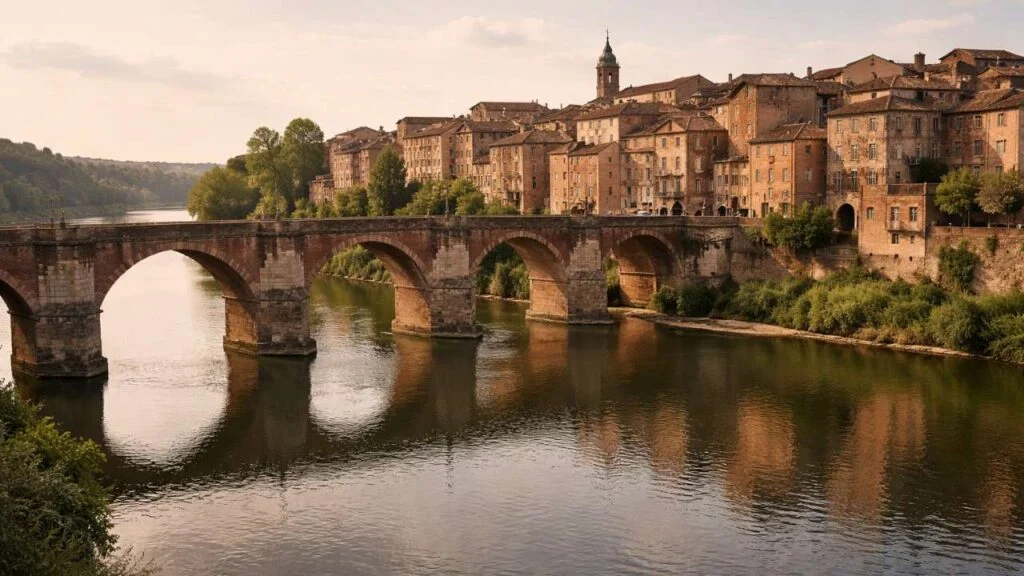
Some towns announce themselves boldly. Others, like Albi, invite you in with a gentler confidence—revealing their charm gradually, through color, calm, and quiet moments that stay with you long after you’ve gone.
Set in the heart of southern France, Albi feels deeply rooted yet refreshingly unhurried. Life here unfolds at a human pace. Morning light warms rose-colored walls. Church bells echo softly across the river. Conversations linger over coffee, unbothered by the clock.
This is a town that doesn’t rush to impress—and that is precisely its magic.
A UNESCO World Heritage Town with Quiet Gravitas
Albi holds a rare distinction—it is recognized as a UNESCO World Heritage Site, not for a single monument, but for the remarkable unity of its historic center. This recognition honors the town’s cohesive medieval urban design, its distinctive use of rose-colored brick, and the powerful architectural presence that has shaped its identity for centuries.
At the heart of this designation lies the cathedral and its surrounding episcopal quarter, a striking ensemble that reflects both spiritual authority and civic life. Unlike many heritage sites that feel preserved in isolation, Albi’s UNESCO-listed center remains vibrantly lived in. Homes, cafés, and daily rituals exist seamlessly alongside centuries-old structures.
This balance—between preservation and everyday life—is what makes Albi extraordinary. Its UNESCO status is not about grandeur alone, but about continuity. History here is not frozen in time; it breathes, evolves, and remains beautifully relevant.
The Warmth of Rose Brick and Medieval Grace
It’ defining feature is its architecture. Instead of pale limestone or dramatic stone facades, the town is built almost entirely from rose-hued brick. The effect is subtle yet striking—especially at sunrise and dusk, when the entire skyline glows with a muted, terracotta warmth.
At the center stands its cathedral, monumental in scale yet restrained in color. From the outside, it feels almost fortress-like, solid and protective. Inside, however, it reveals an entirely different mood—ornate, luminous, and unexpectedly delicate. It tells a story of faith, power, and artistry woven together in pigment and form.
Walking through the old town feels like moving through layers of time. Narrow streets curve organically. Hidden courtyards appear without warning. Nothing feels staged. Everything feels lived in.
An Artistic Spirit Woven Into Daily Life
Albi carries a quiet artistic confidence. It is the birthplace of one of France’s most expressive artists, and that legacy still lingers in the air. Art here is not loud or performative—it is reflective, intimate, and human.
Museums, historic residences, and simple street scenes all echo this creative spirit. Even without stepping into a gallery, you feel it in the details: hand-painted shutters, softly aging walls, and the way light plays across brick and water.
Albi doesn’t separate art from everyday life—it integrates it seamlessly.
Life Along the River
The Tarn River is Albi’s calming presence. It flows steadily beside the old town, mirroring its buildings and softening its edges. Walking along the river feels meditative. The sound of water, the rhythm of footsteps on stone, the openness of the sky—it all encourages stillness.
Crossing the old bridge, you sense continuity rather than nostalgia. This is not a monument frozen in time; it’s a working part of daily life. Locals cross it without ceremony, reminding visitors that Albi’s beauty is not preserved for display—it exists to be lived.
Flavors of the South, Uncomplicated and Honest
Food in Albi reflects its character: comforting, generous, and rooted in tradition. Meals are built around regional ingredients and long-held recipes. There is richness here, but never excess. Everything feels intentional, unpretentious, and deeply satisfying.
Markets brim with seasonal produce and local specialties, encouraging slow mornings and thoughtful meals. Dining is not rushed. It’s a ritual—a pause in the day meant to be savored.
10 Common Mistakes to Avoid When Visiting Albi, France
1. Treating It as Only a Short Stop
Many travelers rush through in just a few hours, missing the slow rhythm, riverside walks, and layered history.
2. Focusing Only on Major Landmarks
While the cathedral is essential, limiting a visit to headline sites overlooks the charm of quiet streets and everyday life.
3. Skipping the Old Town Walks
Not allowing time to wander aimlessly through the historic center means missing its most intimate and atmospheric moments.
4. Overlooking the UNESCO Context
Some visitors note the designation without understanding that it honors the entire historic ensemble, not just one building.
5. Assuming It’s Similar to Provence
This region belongs to Occitanie, with its own cultural identity, architecture, and culinary traditions distinct from Provence.
6. Not Spending Time by the River
The river is central to the town’s character. Skipping it removes an essential layer of calm and visual beauty.
7. Rushing Meals
Dining here is meant to be unhurried. Eating quickly or sticking only to familiar dishes misses the local food culture.
8. Visiting Only During Peak Summer Hours
Midday heat and crowds can dull the experience. Early mornings and evenings reveal the town at its most beautiful.
9. Overplanning Every Hour
A tightly packed itinerary works against the destination’s appeal. It’s best experienced with flexibility and space to pause.
10. Leaving Without Reflecting
This is not a place of instant spectacle. Leaving without slowing down to absorb its atmosphere means missing what makes it memorable.
You may also enjoy: Roussillon, France: One of the Most Charming French Towns

Why Albi Stays With You
Albi doesn’t demand attention. It earns affection quietly. It’s a place for travelers who value atmosphere over spectacle, authenticity over trend, and depth over drama.
You come for the architecture, the history, the art—but you remember the feeling. The warmth of brick at sunset. The calm of the river. The sense that life, here, is allowed to unfold gently.
Albi is not a destination you simply visit.
It’s one you carry with you—softly, beautifully, long after the journey ends.
You may also enjoy: Riquewihr, France: A Storybook Village in Alsace

Frequently Asked Questions About Albi, France
1. Where is it located in France?
It sits in southern France, within the Occitanie region, along the Tarn River, surrounded by gently rolling countryside.
2. Why is it a UNESCO World Heritage Site?
The designation recognizes the exceptional unity of the historic center, including the cathedral, episcopal buildings, and medieval layout built in distinctive rose-colored brick.
3. What is it best known for?
Its rose-brick architecture, imposing Gothic cathedral, artistic heritage, and relaxed southern atmosphere are what stand out most.
4. Is it worth visiting compared to larger French cities?
Yes. It offers a quieter, more intimate experience, ideal for travelers who value history, culture, and slow travel over crowds.
5. How much time should you spend there?
One to two days is enough to explore the historic center, enjoy the riverfront, visit museums, and settle into the unhurried rhythm.
6. What makes it different from other medieval towns in France?
Unlike stone-built towns, the widespread use of rose-colored brick gives it a warmer, softer appearance and a distinct architectural identity.
7. Is it suitable for slow travel?
Very much so. A walkable old town, calm river setting, and café culture make it ideal for slow, immersive exploration.
8. What kind of traveler will enjoy it most?
It appeals to cultural travelers, art lovers, history enthusiasts, and those seeking a peaceful, authentic experience.
9. What is the best time of year to visit?
Spring and early autumn offer mild weather, gentle light, and fewer visitors, enhancing the town’s tranquil feel.
10. Does it feel touristy?
Despite its UNESCO status, it retains a lived-in atmosphere, where daily life continues naturally alongside historic landmarks.
You may also enjoy: Eguisheim, France: A Fairytale Among French Villages


