
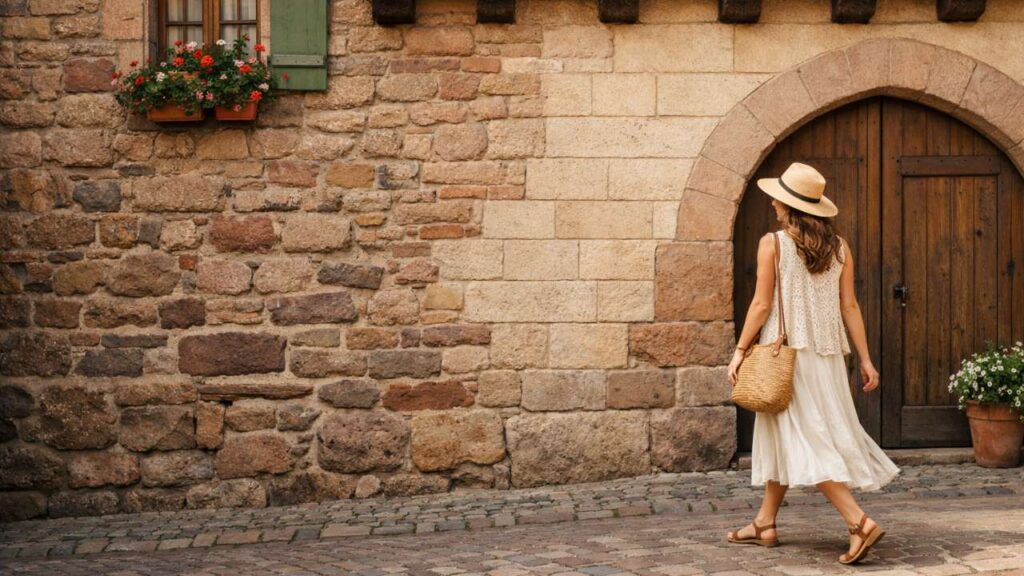
Some of the most meaningful moments in travel happen when nothing is scheduled.
No timed tickets.
No color-coded itineraries.
No pressure to “make the most” of every hour.
Traveling without a daily plan isn’t careless or unprepared—it’s intentional openness. It’s choosing to let a place set the pace instead of arriving with one already decided.
And once you experience travel this way, it quietly changes how you move through the world.
When the Day Is Empty, the Place Gets Louder
A full itinerary keeps your attention forward—toward what’s next.
An open day brings your attention into the present.
Without a checklist, you begin to notice things you’d otherwise pass by:
- the way light shifts on stone walls
- how cafés fill and empty at certain hours
- which streets invite lingering and which encourage movement
These aren’t moments you can schedule. They appear only when you’re not rushing toward something else.
Unplanned Travel Creates a Different Kind of Calm
Daily plans often carry a quiet urgency. Even enjoyable activities become tasks to complete.
When you remove the plan, that urgency dissolves.
You wake up without deciding where you need to be. You move when you’re ready. You pause when something holds your attention longer than expected. The nervous system softens. Time stretches.
Travel becomes less about achievement and more about being present.
Places Reveal Themselves Slowly
Many destinations are designed to impress quickly—main streets, viewpoints, highlights meant to be seen once and checked off.
But places that stay with you tend to reveal themselves gradually:
- a bakery you pass every morning before you finally step inside
- a side street you only notice after walking the same route twice
- a café that feels different each time of day
Without a daily plan, repetition becomes part of the experience. And repetition builds familiarity, which turns a destination into a lived-in place rather than a backdrop.
Also Read: The Old Money Style Travel Capsule Wardrobe: How to Pack with Poise

You Start Traveling by Rhythm Instead of Time
When the clock stops leading, rhythm takes over.
You begin to move with:
- morning quiet
- midday energy
- late-afternoon stillness
You sit when places invite sitting. You walk when walking feels natural. You leave when the moment feels complete, not when the schedule demands it.
This rhythm-based travel feels surprisingly grounding. It mirrors how people actually live in the places you’re visiting.
Spontaneity Doesn’t Mean Chaos
Traveling without a daily plan doesn’t mean doing nothing or wandering aimlessly. It means making decisions in real time, informed by how you feel and what the place offers that day.
You still choose:
- where to walk
- where to sit
- what to explore further
The difference is that these choices respond to the moment rather than a pre-written agenda.
And often, those spontaneous decisions lead to the most memorable experiences.
You may also enjoy: 20 Travel Essentials Every Woman Should Pack

You Remember Feelings More Than Sights
When travel isn’t rushed, memory changes.
You may not remember every church or museum you passed. But you will remember:
- the afternoon you spent sitting somewhere longer than planned
- the street you walked twice just because it felt right
- the café where time seemed to pause
Unplanned travel leaves space for emotion—and emotion is what memory holds onto.
Why This Way of Traveling Feels So Rare
Modern travel culture encourages optimization: see more, do more, move faster. Daily plans promise control in unfamiliar places.
But control often comes at the cost of connection.
Traveling without a daily plan feels rare because it asks you to trust the experience—and yourself. It requires letting go of the idea that every moment needs justification.
That surrender is where the beauty lies.
How to Try Traveling Without a Daily Plan
You don’t need to abandon planning entirely to experience this.
Start small:
- Plan where you’ll stay, not what you’ll do each day
- Choose one or two anchors, then leave the rest open
- Allow at least one full day with no obligations
That space—unclaimed and unscheduled—often becomes the highlight of the trip.
A Different Kind of Richness
Traveling without a daily plan doesn’t make a trip less meaningful.
It often makes it deeper.
It replaces urgency with awareness.
It trades accomplishment for presence.
It allows places to meet you where you are.
And long after the trip ends, what stays with you isn’t what you managed to fit in—but how it felt to finally slow down enough to notice where you were.
10 Common Mistakes to Avoid When Traveling Without a Daily Plan
- Confusing flexibility with lack of preparation
Traveling without a daily plan doesn’t mean arriving unprepared. Secure accommodations, understand local transportation, and know basic logistics so openness feels freeing, not stressful. - Trying to stay spontaneous in places that require advance booking
Some destinations still require planning for key experiences. A no-plan approach works best when paired with awareness of what truly needs reservations. - Packing too many expectations into “unplanned” days
Expecting every unscheduled day to feel magical creates quiet pressure. Some days will be ordinary—and that’s part of the beauty. - Over-relying on your phone for decisions
Constantly checking reviews or maps can replace one form of planning with another. Let curiosity and observation guide you before screens do. - Moving locations too quickly
Unplanned travel works best when you stay in one place long enough to recognize rhythms. Frequent moving often reintroduces urgency. - Ignoring your energy levels
Without a plan, it’s easy to push yourself unintentionally. Rest is part of the experience, not time wasted. - Feeling guilty for “doing nothing”
Sitting, wandering, or watching daily life is not wasted time. It’s often where the deepest connection forms. - Assuming this style works the same everywhere
Unplanned travel suits walkable towns and slower regions best. Adapting the approach to the destination prevents frustration. - Comparing your trip to others’ itineraries
Measuring your experience against someone else’s checklist undermines presence. Your travel doesn’t need to look productive to be meaningful. - Rushing to fill empty space when discomfort arises
Initial stillness can feel unfamiliar. Resist the urge to immediately schedule something—give the space time to settle.
A Quiet Takeaway
The beauty of traveling without a daily plan isn’t freedom from structure.
It’s freedom within the experience.
When you stop directing every moment, travel stops performing for you—and starts offering something far more lasting: connection.
10 Frequently Asked Questions About Traveling Without a Daily Plan
- Is traveling without a daily plan irresponsible?
Not at all. Traveling without a daily plan doesn’t mean being unprepared—it means staying flexible. Accommodations, transportation, and essentials can still be arranged in advance while leaving your days open. - How do you avoid missing important sights without a plan?
Instead of trying to see everything, focus on what naturally draws your attention. Most travelers remember how a place felt far more than every landmark they visited. - Is this style of travel suitable for first-time visitors?
Yes, especially for small towns, villages, and walkable cities. First-time visitors often benefit from slowing down rather than rushing through a checklist. - Does traveling without a plan save or cost more money?
It can often save money. Without pressure to book activities or timed attractions, you’re more likely to enjoy simple, low-cost experiences like walking, sitting at cafés, or exploring neighborhoods. - How do you decide what to do each day without planning?
You let the day guide you. Weather, energy levels, and what you notice while walking often shape the best decisions naturally. - Is traveling without a plan the same as being spontaneous?
It’s related, but not chaotic. This approach is less about impulse and more about responding thoughtfully to your surroundings in real time. - Does this work in busy or popular destinations?
It works best when paired with off-peak timing, early mornings, or quieter neighborhoods. Even busy destinations have calm rhythms once you step away from main attractions. - What if I feel anxious without a schedule?
Start small. Leave one day unplanned or schedule only one anchor activity. Over time, comfort with unstructured travel grows naturally. - Is traveling without a daily plan better for longer trips?
Yes. Longer stays allow places to reveal themselves gradually and make unplanned travel feel more natural and grounded. - What’s the biggest benefit of traveling without a daily plan?
Presence. Without constantly thinking about what’s next, you’re more likely to feel connected—to the place, to your own pace, and to the experience itself.
You may also enjoy: 10 Stylish Winter Outfits Every Woman Should Pack for a Trip


